Wood Closet Systems vs. Wire Shelving: Which Lasts Longer (and Why)
Posted February 5, 2026
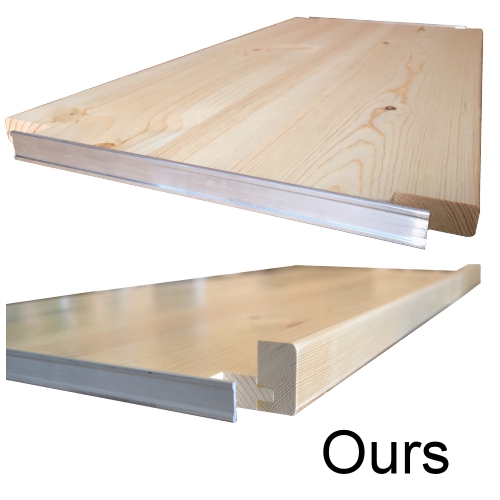
Walk down the closet aisle at any home improvement store and you’ll see two dominant options: wire shelving at the cheap end, and wood closet systems at the premium end. The price gap is real — a wire reach-in kit might cost $80, where a solid wood reach-in runs several times that. So most people pick wire and call it good.
Then five years go by. The wire bows where the heaviest clothes hung. Sweater hangers slide into the gaps and snag wool. Small items fall through. The vinyl coating starts cracking. Refinishing isn’t an option — it’s steel, you can’t sand and re-stain it. So the next call is to a closet contractor for a tear-out and rebuild. The cheap option ended up costing more.
This is the part of the comparison nobody mentions when you’re shopping. Here’s the honest side-by-side.
The 5-Year Test: How Wire and Wood Compare
The fairest way to compare closet materials is over time, not at the moment of purchase. Here’s what the same closet looks like at year 0, year 5, and year 20:
- Wire shelving at year 5 — Visible sag where hanging clothes load the front edge. Vinyl coating chipping at high-friction points. Small items fall through. Hangers slide into gaps. Anything you set down rolls or tips.
- Wire at year 20 — Most installations have been replaced at least once. The original brackets are usually rusted at the wall mount. The coating is breaking down.
- Solid wood at year 5 — Indistinguishable from new. Maybe a small scratch from a belt buckle.
- Solid wood at year 20 — Still in service. Sand and re-stain it once at year 15 and it looks new again. Many of our customers are still using Lundia closet systems they bought in the 1990s.
Where Wire Shelving Fails
Wire isn’t bad for everything — it works fine in a garage or laundry room where you don’t care about appearance and the loads are light. The failure modes show up when you ask wire to do what closets actually need:
- Sag under hanging weight — A standard wardrobe of hanging clothes weighs 30–60 lbs per linear foot. Wire bends under that load over time and the bend doesn’t recover.
- Snags fabric — Wool sweaters, fine knits, and silk all catch on the wire. Even with vinyl coating, the seams snag.
- Items fall through — Small shoes, jewelry boxes, paperbacks. Wire grids leave 1″–2″ gaps.
- Hangers slide — Without a continuous flat rail, hangers migrate toward the lowest point. You end up with all your clothes piled in one corner.
- Can’t support drawers, doors, or accessories — Wire is fundamentally a shelf. There’s no integrated way to add a drawer column, hang a door, or mount a tie rack.
The Hidden Costs of “Cheap” Closet Solutions
The sticker price gap between wire and wood looks huge until you do the cost-per-year math:
- Wire reach-in kit — $80 up front, replaced every 7–12 years. Over 30 years that’s 3–4 replacements plus install labor each time. Real cost: $400–$700 over 30 years, with no equity or refinish-ability.
- Solid wood reach-in — Higher up front but built to last 50+ years and refinishable. Real cost-per-year is dramatically lower — and you can resell or transport the system if you move.
Customers regularly tell us our pricing is roughly half of California Closets’ melamine systems — and ours is real solid wood. See pricing examples.
The Health Comparison Most People Miss
Wire shelving isn’t toxic on its own — it’s steel and PVC coating. The toxicity problem is bigger when you compare wood-look closets: melamine and particle board. Those are the materials California Closets, Closet World, ClosetMaid, IKEA, and most “wood look” brands use. They contain urea-formaldehyde glues that off-gas a known human carcinogen for years after install. Read the formaldehyde data.
Solid wood is the only option that’s both healthier than melamine and more durable than wire. That’s why the White House selected Lundia for their 2023 project — the only U.S. manufacturer meeting their solid-wood, formaldehyde-free standards. Read the full story.
The Verdict: When Wire Makes Sense, When Wood Does
Wire is fine for: Garages, basements, laundry rooms, utility storage. Anywhere you don’t care about appearance and the loads are light.
Wood is the right call for: Bedrooms, walk-ins, reach-ins, mudrooms, pantries, home offices — anywhere the closet is part of a living space, holds clothing or valuables, or needs to last more than a decade.
If you’re currently looking at wire and considering whether to upgrade to wood: yes. The math always works in wood’s favor over a 10+ year horizon — and your clothes will thank you.
Wire vs. Wood Closet — Frequently Asked Questions
Is wire shelving really that much cheaper than wood?
At purchase: yes, often 1/3 to 1/2 the price of solid wood. Over 20+ years: usually more expensive once you factor in replacements and reinstall labor. Real wood closets are typically still in service when wire is on its third replacement.
Will solid wood shelves sag like wire does?
No. Lundia is built to commercial-grade load standards — the same construction we’ve installed in libraries, hospitals, and military buildings for over 50 years. See full strength specifications.
Can I install a wood closet system myself?
Yes. Lundia ships flat-pack and assembles with a peg system — no specialty tools, no carpentry experience needed. Most customers complete a reach-in install in 2–4 hours. See how Lundia works.
What about melamine — isn’t that “like wood”?
Melamine is particle board with a printed plastic film glued to it. The “wood look” is a printed image, not real wood. Edges chip, panels swell when wet, and the urea-formaldehyde glue off-gasses for years. See the full material comparison.
Ready to upgrade from wire?
Send us your closet dimensions and we’ll design a custom solid-wood replacement for free, with no obligation.
Get My Free DesignRelated reading:
← Back to Blog